

‘Trauma is any event that overwhelms the ordinary human adaptations to life. The event leaves us powerless or helpless with losses of control, dignity, connection, sense of belonging, or meaning.’
Judith Herman
Trauma
Understanding Trauma: How It Changes the Brain, Body and Sense of Self
Trauma can change how we experience ourselves, other people and the world around us. Experiences that once felt manageable may become overwhelming, relationships may feel less safe, and everyday situations can trigger reactions that seem to come out of nowhere.
Sometimes, the event is long over, but the feelings, memories and bodily responses remain.
Understanding trauma can help us make sense of these experiences. It can help us recognise that the ways we think, feel and behave may be connected to what we have been through, rather than being evidence that something is wrong with us.
Trauma is not simply about what happened to you. It is also about how the experience affected you.
When an experience overwhelms our ability to cope
Trauma can arise when an experience overwhelms our capacity to cope, leaving us feeling powerless, helpless, unsafe or disconnected.
It can follow a single distressing event or develop through repeated experiences over time. It can also arise within relationships, particularly when the people or environments we depend upon for safety become sources of fear, rejection or harm.
Trauma is deeply personal. Two people can experience similar circumstances but be affected in very different ways. Our previous experiences, support networks, individual circumstances and sense of safety can all influence how we respond.
Trauma can affect our emotional, psychological, physical and social wellbeing. Its effects may continue long after the original experience has ended.
You do not need to compare your experiences with anyone else’s to recognise that they have affected you

‘Trauma – it’s not what happens to us, but what we hold inside us in the absence of an empathetic witness.’
Peter Levine
Stress and Trauma: What’s the Difference?
Stress and trauma can overlap, but they are not the same thing.
Stress is a normal response to pressure or demands that feel difficult to manage. Work deadlines, financial worries, relationship difficulties and uncertainty about the future can all contribute to stress.
Trauma involves an experience that overwhelms a person’s ability to cope and can fundamentally affect their sense of safety.
During stress, we might temporarily struggle to concentrate, regulate our emotions or make decisions. When the pressure eases, these difficulties may improve.
Following trauma, the effects can persist. Our nervous system may continue responding as though danger is present, even when the original situation has passed.
Removing a stressful situation can bring relief, but it does not necessarily resolve the effects of trauma.
Importantly, an experience that feels stressful to one person may be traumatic to another. The impact depends on the individual and their circumstances.
Stress versus Trauma
Stress
Often arises from everyday pressures and demands.
May improve when the pressure reduces.
Can temporarily affect concentration and emotional regulation.
May leave us feeling worried or overwhelmed.
Trauma
Can follow an overwhelming or threatening experience.
Its effects can continue long after the experience ends.
Can affect our sense of safety, identity and relationships.
May leave us feeling frightened, powerless or constantly on alert.
Neither experience should be dismissed. Prolonged or severe stress can also have significant effects on wellbeing.

‘Trauma is something that overwhelms your coping capacities and confronts you with the thought, ‘Oh my God, it’s all over, and there’s nothing I can do. I’m done for, I may as well die.’ Trauma lives inside of you in horrible sensations, panic reactions, up tightness, explosions and impulses. Because trauma lives inside of you, getting to know yourself can be the scariest thing to do.’
Bessel van der Kolk
Different Types of Trauma
Trauma doesn’t look the same for everyone
Trauma can develop through many different experiences. Understanding the different forms it can take may help us recognise experiences that are sometimes overlooked.
A distressing experience, such as a serious accident, assault, sexual violence or witnessing a life-threatening event.
Experiences during childhood, including abuse, neglect, inconsistent care or disrupted attachment, which can affect our developing sense of safety, trust and self-worth.
Repeated or prolonged exposure to distressing experiences, particularly within relationships. Examples include ongoing abuse, domestic violence and long-term bullying.
Experiences of rejection, abandonment, betrayal, humiliation or emotional harm within relationships. These experiences can influence how we approach closeness, trust and connection.
Distressing experiences associated with illness, diagnosis, medical procedures, childbirth or healthcare interactions that leave someone feeling frightened, powerless or dismissed.
Repeated experiences of racism, sexism, homophobia, ableism, exclusion or other forms of discrimination that undermine a person’s dignity, safety or sense of belonging.
The effects of witnessing or hearing about other people’s traumatic experiences. This can affect people in caring professions and others who are repeatedly exposed to distressing accounts.
The continuing effects of trauma experienced by previous generations or communities, which can influence family relationships, collective experiences and a sense of identity.
These categories can overlap. They are intended to support understanding, not to rank experiences or determine how seriously someone has been affected.

‘For a child or a person in a hostile social environment, being rejected or bullied triggers the same survival responses (fight, flight, freeze, or fawn) as physical danger.’
Janina Fisher
When the Past Follows Us Into the Present
Trauma doesn’t necessarily end when the event is over
An experience may be in the past, yet our mind and body can continue responding as though the danger has not passed.
A sound, smell, facial expression, particular situation or interaction may remind us of something distressing. Sometimes, we may not consciously recognise the connection, but we notice a sudden change in how we feel.
We might become anxious, angry, withdrawn or overwhelmed. We might feel numb, disconnected or unusually alert to what is happening around us.
These responses can be confusing, particularly when we know logically that we are no longer in the original situation.
Trauma can also influence how we interpret new experiences. When we have been hurt or let down, we may begin anticipating rejection, expecting something to go wrong or finding it difficult to trust that things can be different.
This does not mean that we are deliberately holding on to the past. It may mean that our system has learned to anticipate danger as a way of trying to protect us.
Sometimes, what feels like a reaction to the present is also connected to something we have experienced before.
Trauma can affect people in many different ways, and not everyone experiences flashbacks or recognises their triggers.
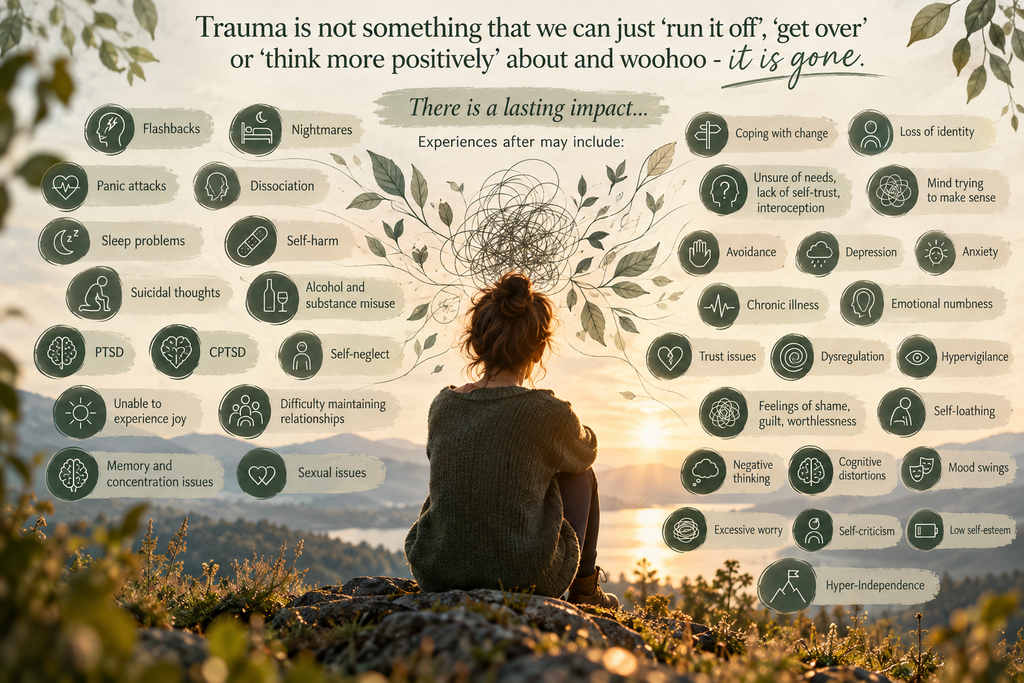
Trauma and the Brain: When Survival Takes Over
Understanding the brain’s survival response
When we perceive danger, the brain prioritises survival. This is an important protective response: it helps us react quickly when we need to escape, defend ourselves or protect ourselves from harm.
However, when the stress response becomes overwhelming, some of the brain functions involved in reasoning, planning and emotional regulation can become less effective.
The prefrontal cortex, at the front of the brain, plays an important role in these functions. It helps us think through situations, consider consequences, manage impulses, regulate emotions and choose how to respond.
During an intense threat response, communication between the prefrontal cortex and other brain regions involved in threat and emotion can be disrupted. We may find it harder to pause, think clearly and consider our options.
Instead of being able to reflect on a situation and choose a response, we may react automatically from fear, anger, panic or the need to protect ourselves.
This can help explain why someone might say or do something in the heat of the moment that they later struggle to understand, or why they may feel unable to think clearly when overwhelmed.
It is not necessarily that you don’t know what to do. In that moment, you may be struggling to access the brain functions that help you work it out.
The effects vary from person to person. These changes do not mean that the prefrontal cortex permanently switches off or that everyone who experiences trauma develops the same difficulties.

‘Earth will be safe when we feel in us enough safety.’
Thich Nhat Hanh
What can we struggle with when the prefrontal cortex is less effective?
When the brain is prioritising survival, everyday abilities that we usually take for granted can become more difficult.
The following examples explain how this may affect everyday life.
Thinking, planning and organising
The prefrontal cortex helps us organise information, think ahead and work towards goals. When these functions are disrupted, we may struggle with:
- Planning: Thinking ahead and working out the steps needed to complete something.
- Decision-making: Weighing up options, considering consequences and choosing what to do.
- Working memory: Holding information in mind long enough to use it, such as remembering what someone has just said.
- Organising: Putting thoughts, tasks and information in order.
- Setting goals: Identifying what we want to achieve and working out how to get there.
- Problem-solving: Considering different possibilities rather than feeling stuck.
- Following directions: Taking in instructions, remembering the steps and carrying them out.
Even relatively simple tasks can feel overwhelming when we are already under significant stress.
Attention, concentration and focus
When our brain is scanning for danger, it can be difficult to direct our attention towards anything else.
We might struggle with:
- Maintaining focus on a task or conversation.
- Concentrating for long periods.
- Ignoring distractions.
- Taking in new information.
- Switching attention between tasks.
- Remembering what we were doing or saying.
This can be frustrating when we are trying our best but cannot seem to make our brain cooperate.
Emotional regulation and impulse control
The prefrontal cortex helps us manage emotions and impulses, allowing us to pause and consider how we want to respond.
When these functions are disrupted, we might find it harder to:
- Regulate intense emotions.
- Pause before speaking or acting.
- Control impulsive reactions.
- Manage frustration or anger.
- Calm ourselves when overwhelmed.
- Understand what we are feeling.
- Choose an appropriate response to a situation.
We may react before we have had time to think, or struggle to explain why something affected us so strongly.
Personality, relationships and social behaviour
When our brain is scanning for danger, the prefrontal cortex contributes to the complex functions that help us navigate relationships and social situations. Trauma-related changes in these functions can affect how we behave and relate to others.
We may struggle with:
- Social behaviour: Understanding social situations and responding in ways that fit the circumstances.
- Empathy: Recognising and responding to other people’s feelings when we are overwhelmed by our own distress.
- Moral reasoning: Considering values, responsibilities and the consequences of our actions.
- Controlling thoughts and actions: Pausing to evaluate an impulse rather than acting immediately.
- Responding appropriately: Finding a considered response when emotions are running high.
- Emotional connection: Remaining present and engaged when we feel threatened or disconnected.
This does not mean that trauma makes someone unkind, removes their values or inevitably changes their personality. Rather, overwhelming stress can make some of the abilities we rely on in relationships more difficult to access.
The difference between reacting and responding
Reacting is often quick and automatic. It can happen before we have consciously considered what is happening.
Responding involves having enough space to notice what we are feeling, consider the situation and choose how we want to act.
When we are overwhelmed, that space can become difficult to find.
We might shout when we feel criticised, withdraw when we feel rejected, become defensive when we feel threatened or agree to something because saying no feels unsafe.
Later, when we are calmer, we may recognise that we would have preferred to respond differently.
This is not about excusing harmful behaviour or suggesting that we have no responsibility for our actions. It is about understanding what can make self-regulation more difficult and recognising that there may be ways to develop greater choice over time.
The aim isn’t to never react. It’s to gradually create more space between what we feel and what we do.
You are more than the ways you learned to cope
Trauma can influence how we behave, particularly when we have spent a long time feeling unsafe, rejected or overwhelmed.
Someone who withdraws from others may be seen as distant or antisocial. Someone who becomes defensive may be labelled difficult or aggressive. Someone who constantly tries to please others may be seen as lacking confidence.
But behaviour can have a history.
Withdrawing may have helped someone avoid further hurt. Staying busy may have kept difficult thoughts at bay. Agreeing with others may once have felt safer than disagreeing.
These responses can develop without conscious awareness. Over time, they may become familiar patterns that influence how we see ourselves and how other people see us.
We might start believing that we are difficult, weak, cold or incapable, rather than recognising that we have developed ways of coping with experiences that were difficult to manage.
Understanding this distinction does not mean that every behaviour is caused by trauma, or that its effects on other people do not matter.
It means that we can look beyond the behaviour itself and become curious about what might be contributing to it.
A coping response is something you have learned. It does not have to be the whole story of who you are.
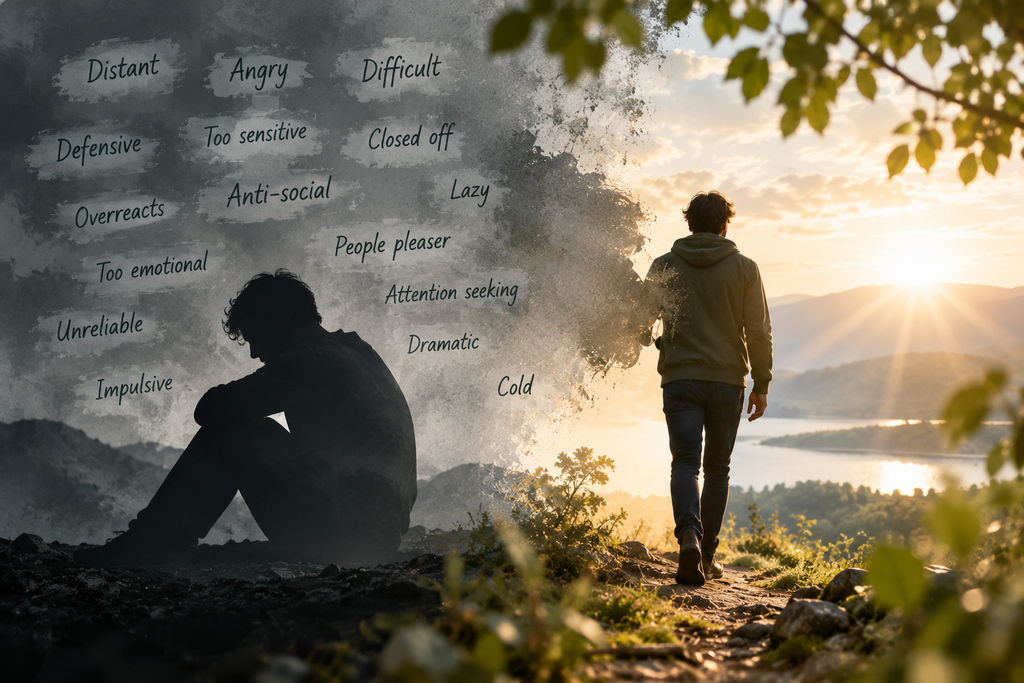
When Survival Responses Are Mistaken for Personality

‘Trauma decontextualised in a person looks like personality. Trauma decontextualised in a family looks like family traits. Trauma decontextualised in people looks like culture.’
Resmaa Menakem
Trauma, Shame and Self-Blame
When we turn the blame inwards
Trauma can leave us questioning ourselves.
We might wonder why we stayed, why we did not speak up, why we reacted with anger or why we still struggle with experiences that happened years ago.
Sometimes, we blame ourselves for what happened. At other times, we judge ourselves for the ways we responded.
We might think we should have known better, been stronger, left sooner or handled things differently.
These thoughts can deepen feelings of shame and make it difficult to recognise that our responses may have developed when we were trying to cope with something overwhelming.
Shame can also make it harder to seek support. We may hide our experiences, withdraw from people or fear that others will judge us if they know what we have been through.
You are not responsible for the harm someone else caused you. And struggling with the effects of an experience does not mean you have failed to heal.
Understanding our responses with compassion can help us begin to separate what happened to us from what we have come to believe about ourselves.

‘The blame for being traumatised, and even for failing to recover, is only and always with the person or people who traumatised them. If we hadn’t been traumatised in the first place, we wouldn’t be failing in some way to recover from trauma now.’
Carolyn Spring

When the body continues to feel unsafe
Trauma and the Body
Trauma can affect more than our thoughts and memories. It can also influence how we experience our bodies.
When the nervous system detects a threat, it can trigger physical changes such as increased heart rate, faster breathing and muscle tension.
These responses are designed to help us survive danger. However, reminders of previous experiences can sometimes activate similar responses even when the original threat is no longer present.
You might notice that your heart races during a difficult conversation, your shoulders tense when someone raises their voice or your breathing changes when you feel anxious.
Some people become very aware of their bodily sensations. Others feel disconnected from their bodies or struggle to recognise what they are feeling.
These experiences can be confusing, especially when we cannot identify an obvious reason for them.
Trauma can also affect our awareness of internal signals, such as hunger, tension, tiredness and emotional needs.
Learning to recognise these sensations may help us better understand our responses, although bodily symptoms can have many causes and should not automatically be attributed to trauma.
Sometimes, understanding what we feel in our bodies can help us make sense of what we are experiencing emotionally.
🌿 Safety
Understanding Your Needs
Healing doesn’t mean forcing yourself to move on or expecting yourself to cope perfectly. It begins with recognising what you feel and understanding what you need.
- Notice your feelings without judging them.
- Recognise when you need rest, space or support.
- Learn to understand and respect your boundaries.
You don’t have to rush your healing or have everything figured out.
💚 Self-Compassion
Healing Without Blame
Trauma can leave us criticising ourselves for how we feel or behave. Self-compassion means becoming curious about our reactions rather than assuming the worst about ourselves.
- Recognise that your responses may have developed for a reason.
- Allow yourself to make mistakes without defining yourself by them.
- Acknowledge your difficulties without unnecessary judgement.
Self-compassion doesn’t mean pretending everything is fine or avoiding responsibility. It means treating yourself with understanding as you learn and grow.
Understanding yourself isn’t about finding everything that’s wrong with you. It’s about making sense of what you’ve experienced.
🤝 Connection
You Don’t Have to Do It Alone
Supportive relationships can help us feel understood, accepted and less alone. Learning to make sense of our experiences and communicate our needs can be an important part of moving forward.
- Allow yourself to seek support when you need it.
- Explore what helps you feel safe with others.
- Remember that everyone’s healing journey is different.
You deserve to feel heard, understood and supported.
A Final Message of Hope
Your past is part of your story, not the entirety of who you are.
Trauma can influence how we see ourselves, how we relate to others and how safe we feel in the world.
But the responses we develop to cope with difficult experiences do not have to define every part of our future.
Understanding what has happened, recognising the ways it may still affect us and approaching ourselves with greater compassion can be meaningful steps towards change.
You do not need to have all the answers before you begin to understand yourself differently.
You are not broken because you have struggled to cope. You are human, and your experiences deserve understanding.

‘The compassionate mind is the mind that transforms.’
Paul Gilbert
FAQs
How do I know if I need trauma therapy?
You may benefit from trauma therapy if a distressing experience continues to affect your daily life, emotions, relationships or sense of safety. Signs can include anxiety, anger, emotional numbness, hypervigilance, intrusive thoughts, avoidance, sleep difficulties or dissociation. You may also feel unlike yourself or struggle to regulate your emotions. You don’t need to experience every symptom to seek support.
What are the signs of unresolved trauma?
Unresolved trauma can leave you feeling as though you’re constantly in survival mode. You might experience emotional numbness, heightened reactions, shame, difficulties with intimacy, persistent tension or unexplained physical symptoms. These experiences can affect your relationships, confidence and ability to feel safe, even long after the original event.
Can trauma therapy make you feel worse before you feel better?
Trauma therapy can sometimes bring up difficult emotions, memories or physical sensations, particularly when exploring painful experiences. You may temporarily feel more emotional or tired as you process what has happened. However, therapy should not overwhelm you, and progress doesn’t have to mean revisiting everything at once. A trauma-informed therapist will work at your pace, prioritising safety, stability and your emotional wellbeing.
Can trauma therapy help me feel safe in relationships again?
Yes, trauma therapy can help you rebuild trust, strengthen boundaries and feel safer in relationships. Trauma can affect how you recognise threats, respond to others and connect emotionally. Therapy can help you understand these patterns, recognise what feels safe and develop greater confidence in expressing your needs. A supportive therapeutic relationship can also provide a space to explore past experiences and practise healthier ways of relating to others.
How long does it take to heal from trauma?
There is no fixed timeline for healing from trauma. Your journey will depend on your experiences, circumstances, support network and individual needs. For some people, meaningful changes happen over months; for others, healing takes years. There is no right or wrong pace, and you don’t need to rush your progress. The aim is to help you gradually build a greater sense of safety, understanding and connection with yourself.

‘Healing doesn’t mean the damage never existed. It means the damage no longer controls our lives.’
Akshay Dubey