
‘Instead of saying ‘I’m damaged, I’m broken,’ I say ‘I’m healing, I’m rediscovering myself, I’m starting’.’
Horacio Jones
How I can help
How I can help those affected by trauma around Stevenage

I help people who feel that life has been challenging and, over time, has changed them in some way. This might show up as trauma, anxiety, numbness, depression, dissociation, anger or a real lack of joy.
Perhaps the numbness or depression leaves you feeling hopeless, as though life is just too hard. You might struggle with motivation or energy, or feel as though you’re not really here, in the moment. Maybe your brain just isn’t braining, and you don’t feel like the person you once were.
Your anger might leave you feeling out of control, confused or even ashamed because this isn’t how you want to feel. You wish you could understand what’s happening and why. Or perhaps your anxiety feels overwhelming, affecting your relationships, your hopes and dreams, and your ability to cope with everyday life.
You might even be questioning the point of living. And yet, somewhere, there may still be a glimmer of hope, even if it’s difficult to recognise. Perhaps that hope is what brought you here, looking for help in this moment.


Sometimes, these feelings are connected to trauma. This might be a single, unexpected event or experiences within relationships that continued over a long period of time. Trauma isn’t always easy to put into words, and you might struggle to understand exactly what’s happening inside you. You may also experience physical reactions that are difficult to explain. This is where somatic trauma therapy can help you explore the connection between your experiences, your mind and your body.
Perhaps you’re grieving, too. You might have lost someone who meant the absolute world to you, and yet the world seems to carry on as though nothing has happened. How is that even possible? You may find it difficult to talk to those close to you because you don’t want to upset them, or because you’re grieving differently from them.
Grief can affect every part of your life. Your mind and body might feel different, your relationships may change, and your work, finances and view of the world may all be affected.

Whatever you’re experiencing, you don’t need to have the right words for it or fully understand what’s happening before reaching out. At AuthentRick Counselling, you can begin to make sense of your experiences, at your own pace, in a space where you can feel heard and understood.
My experience as a human is my biggest asset, I know on a personal level how it feels to have grief and loss. The kind of loss that feels like it has changed me as a person. The kind of loss that made me worry that others couldn’t really understand how it feels to be me. The kind of loss that helps me to understand you, rather than judge you, for your reactions in coping with life after.

‘Books can give you knowledge, but people and time give you experience.‘
Unknown
How my training and experience help you
My qualifications and experience shape the way I work. I work integratively, drawing on evidence-based therapeutic approaches to tailor our sessions to your individual needs.
Here’s how what I’ve learned translates into our sessions.
Person-centred counselling
Level 2 Certificate in Counselling Skills
Level 3 Certificate in Counselling Studies
Level 4 Diploma in Therapeutic Counselling
My core counselling training took place over four years, giving me a strong ethical foundation and a deep understanding of person-centred counselling.
Above all, I recognise that you know yourself better than anyone else. I’m not here to change you or rush your journey, but to walk alongside you as you find your own way forward.
I believe people grow when they have the right conditions, just as a plant needs sunlight to flourish. When our environment is harmful, our growth can suffer. My training has taught me how to create the conditions that support emotional growth, and I bring these into every session.
Somatic trauma counselling
Level 5 Diploma in Somatic Trauma Therapy
My somatic trauma training took place over a year, alongside further learning in grounding, orienting, mindfulness, the Flash Technique, the Rewind Technique and Brainspotting.
This has given me a deeper understanding of how trauma affects the brain and body. By exploring the science behind your experiences, I can help you make sense of your reactions, feel less alone and better understand your triggers.
I also draw on techniques that can help calm or energise your nervous system. Together, we can explore what works for you, helping you feel safer and develop tools to use when you feel overwhelmed or disconnected.
Breathwork qualification
Level 3 Award in Breathwork Coaching
My six-month breathwork training helped me understand the relationship between breathing and the nervous system.
Trauma can change the way we breathe, which can also affect areas such as the chest, back and neck. Together, we can explore your breathing patterns and practise techniques that may help you manage anxiety, anger, numbness or low mood.
CBT qualification
Advanced Diploma in Cognitive Behavioural Therapy
My year-long CBT training expanded my understanding of core beliefs and cognitive distortions.
Trauma can influence how we see ourselves, other people and the world around us. In sessions, if you wish, we can explore these beliefs, where they may have come from and how they influence your experiences today.
My Experience with The Road Victims Trust (RVT)
I have worked with The Road Victims Trust for over three years, gaining valuable experience through training and supporting people grieving the death of a child, partner, parent, sibling, friend and others.
Grief is deeply personal and can show up in countless ways. I don’t believe anyone can be an expert in another person’s grief, but my experience has helped me understand its many faces and the different emotions and challenges it can bring.
Understanding trauma
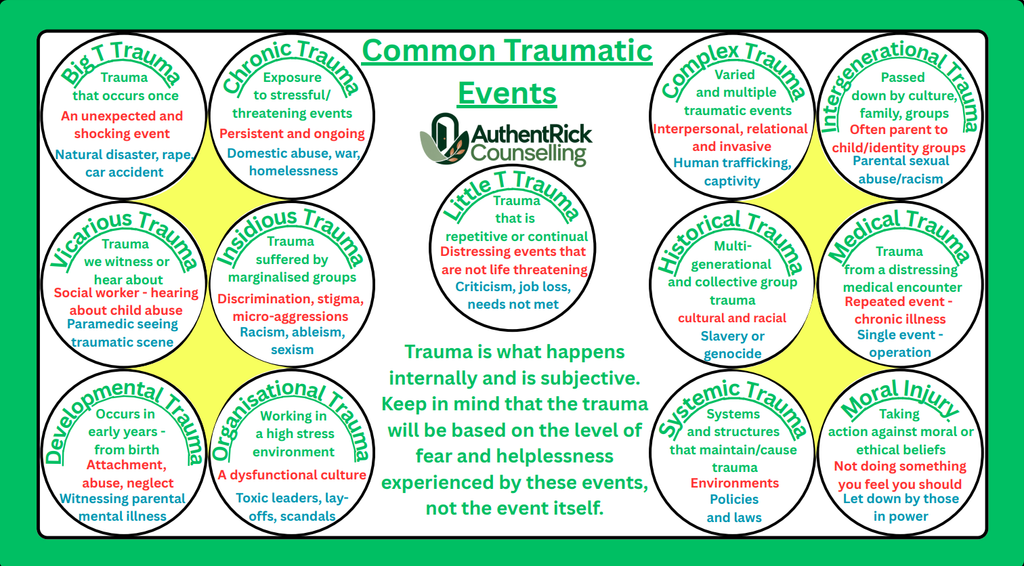
Trauma can arise from many different experiences. Below are some examples of the traumatic events I can support you with.
FAQs
How do I ask a therapist about their experience with trauma?
You can ask about a therapist’s experience during your initial contact or a free consultation. Consider asking about their qualifications, specialist trauma training and experience supporting people with similar experiences. You could also ask how they help clients manage overwhelming emotions and feel safe during sessions.
What type of therapy is best for trauma?
There is no single therapeutic approach that works for everyone. Evidence-based trauma treatments include approaches such as trauma-focused CBT and EMDR, while somatic therapies focus on the connection between the body, nervous system and traumatic stress. The most suitable approach depends on your individual needs, experiences and preferences.
Can I feel like myself again after trauma?
Yes, healing from trauma is possible. Trauma can affect how your brain and body respond to perceived threats, but these responses can change over time. With appropriate support, you can gradually develop a greater sense of safety and reconnect with yourself. Healing may not mean returning to exactly who you were before, but discovering a new sense of normality and hope.
How do I know if a therapist is qualified to work with trauma?
Look for a therapist with relevant qualifications, specialist trauma training and experience supporting people with traumatic experiences. A trauma-informed therapist should prioritise your safety, respect your boundaries and work at a pace that feels manageable for you. They should also offer choice and help you develop strategies for managing overwhelming emotions before exploring difficult experiences.
How does somatic therapy help with trauma?
Somatic therapy explores how trauma can affect the body and nervous system, including physical tension, heightened alertness and feelings of disconnection. Rather than focusing solely on talking about past experiences, it uses body awareness and grounding techniques to help you recognise your responses and develop a greater sense of safety. This can be particularly helpful when trauma feels difficult to put into words.

‘As every therapist will tell you, healing involves discomfort. But so is refusing to heal. And over time, refusing to heal is always more painful.’
Resmaa Menakem